
Altitude Silence
Where the Continent Divides

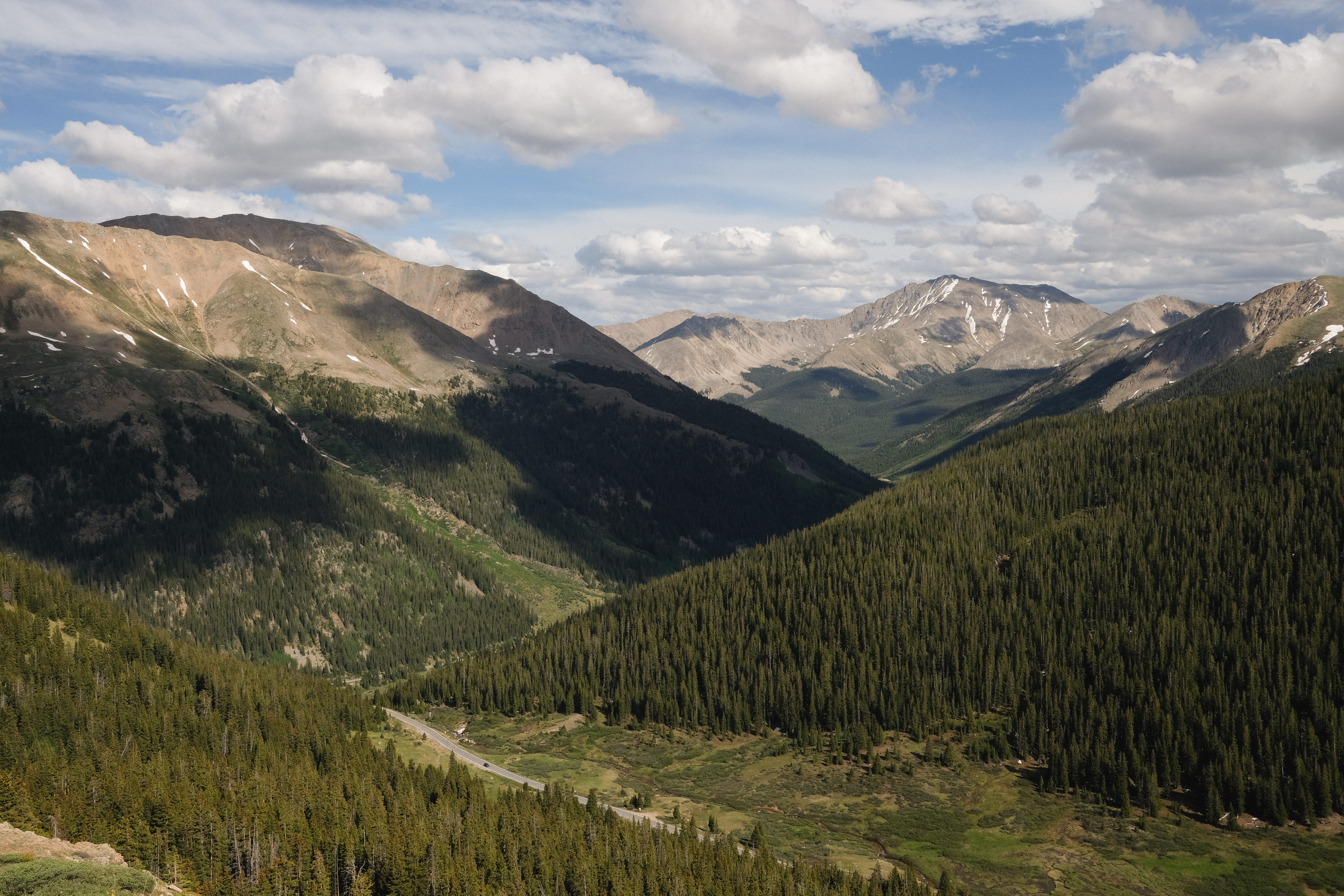
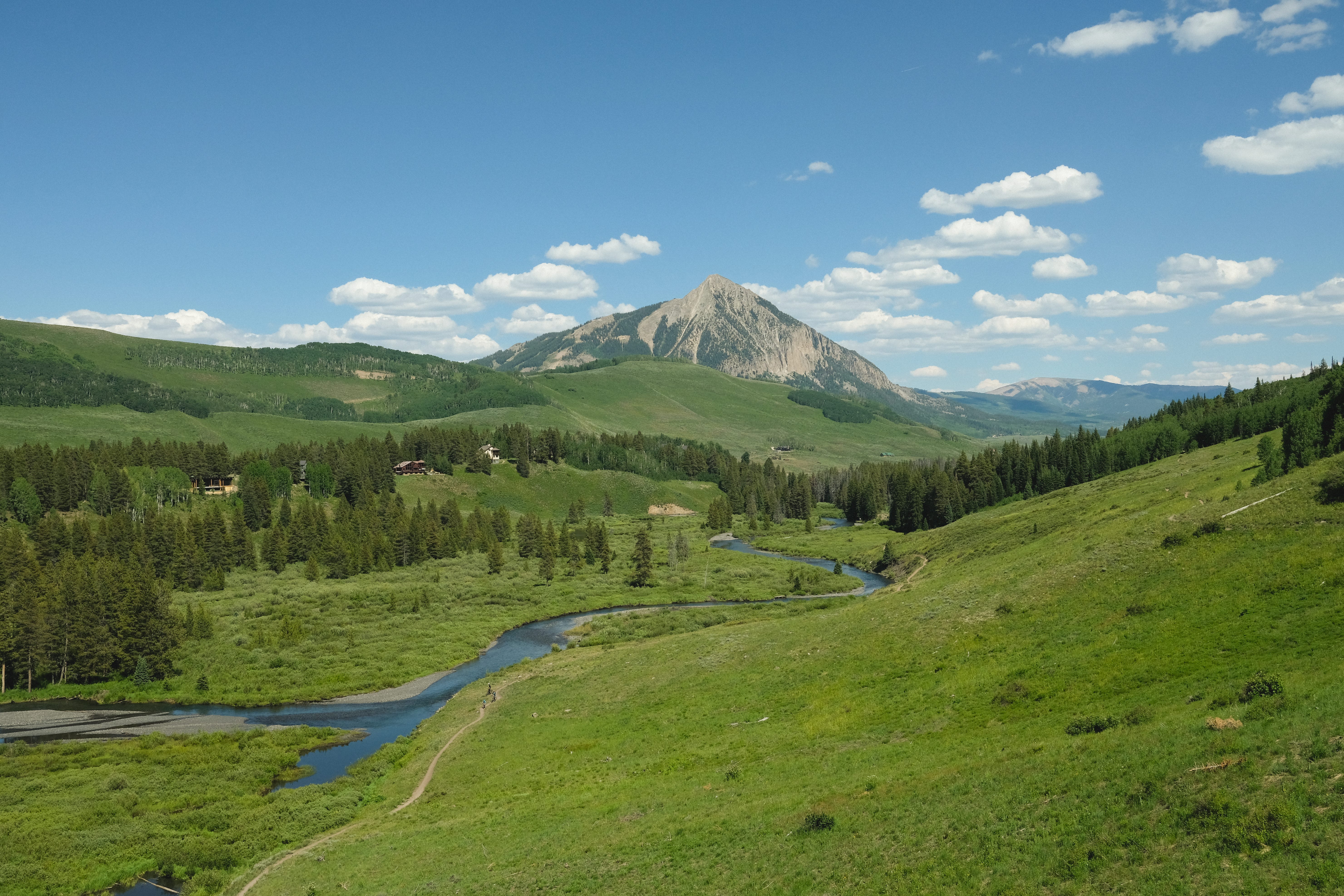
California’s dry season generally begins each May. By the end of June, the hills that were recently full of lush tall grasses become dormant, transitioning into a dried-out monochromatic amber. This explains the surprise I felt when Brooke and I descended into Colorado last week, and from the window seat of our flight, looked out upon an endless expanse of greens. From the sky, I’m certain I had never seen so many tones of green; warms and cools, yellow greens and blue greens, in all directions and stopping only before mountain peaks, where the high altitude sustains no life.
Brooke and I were here for just short of a week with the rare freedom of having no responsibility. This was the first time that she’d be off work since the wedding, so we had set a few days aside to spend time together. In times like these, we have the clarity to draw metaphors out of the ordinary.
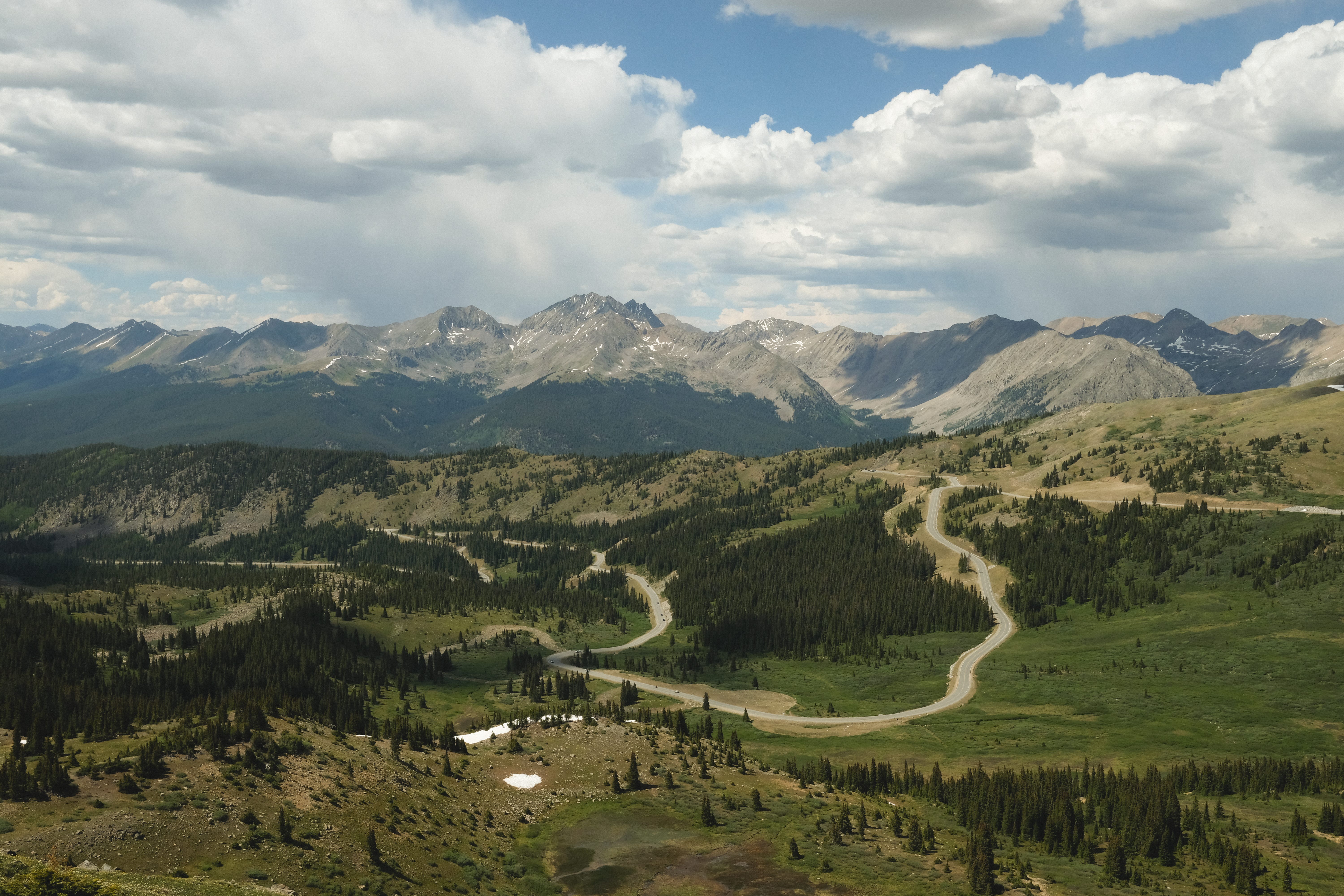
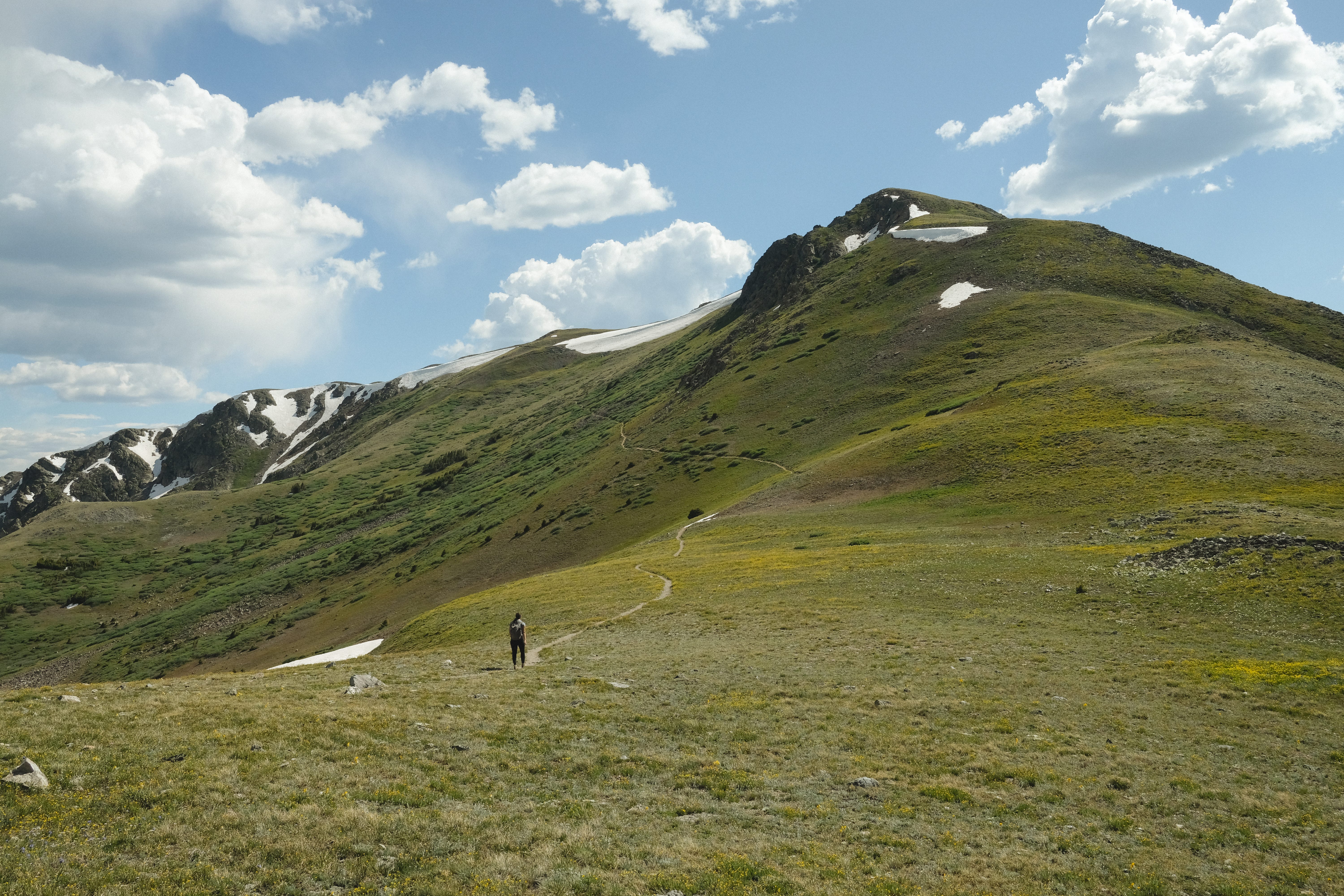
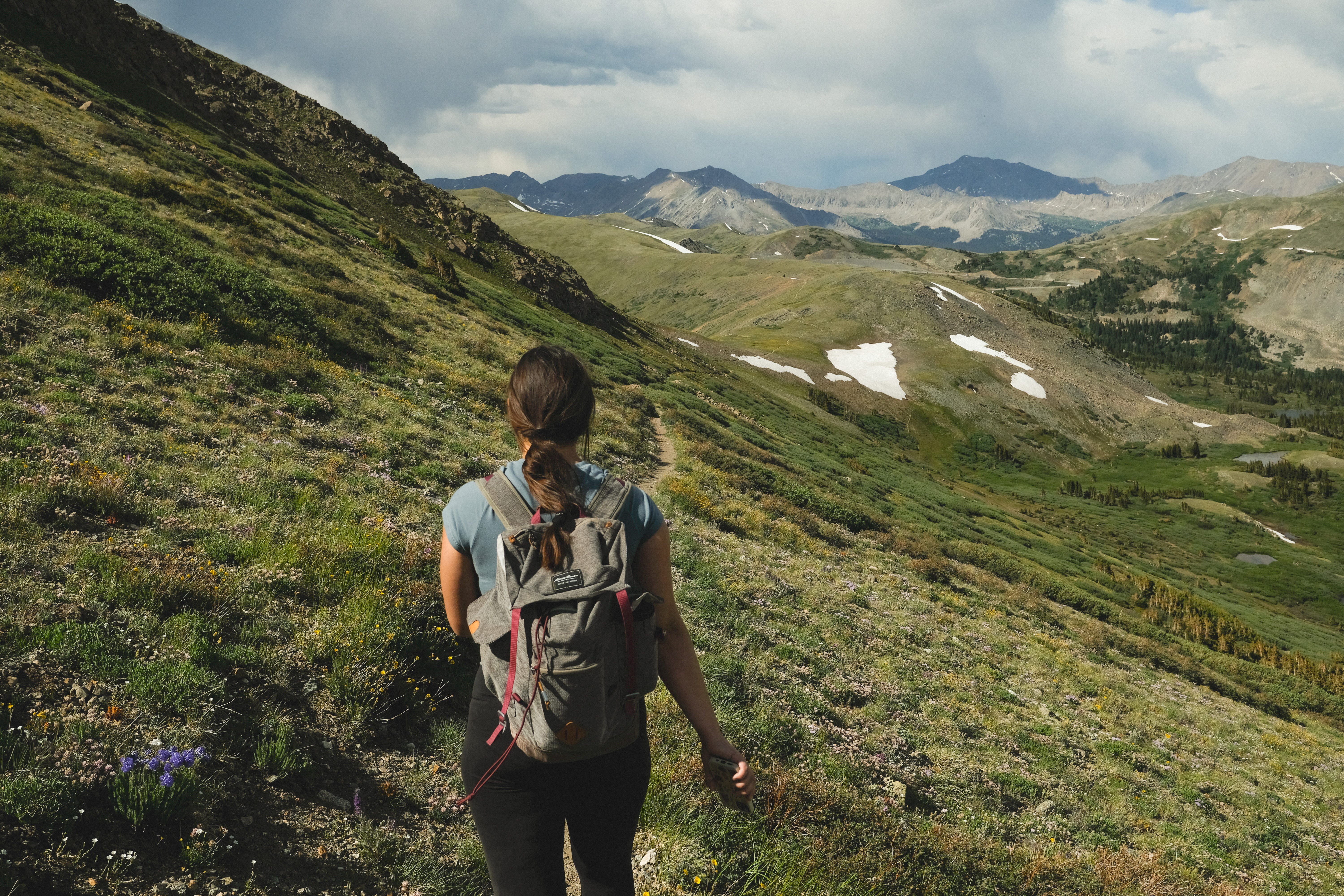
On our second full day in Colorado, we drove East up Independence Pass to the Continental Divide in the Sawatch Range of the Rockies. A Divide such as this exists on every continent, and in North America, it is the boundary which separates the water that runs to the Pacific from that which runs to the Atlantic1. This Divide is a continuous mountain ridge that spans from Western Alaska, through the Canadian and American Rocky Mountains, the Sierra Madre Occidental Mountains in Mexico, to the South American Andes. Later in the week, while traversing the Divide at Cottonwood Pass, we would meet a man hiking the CDT from Mexico to Canada. When I asked him what point of the trail he believed to be the most beautiful, he declared it was the point at which we stood.
That morning, before our drive up Independence Pass, I tried to track the weather patterns. The distant skies were a deep dark gray and it was clear that the mountains would see some rain. The clouds were predicted to clear eventually, but the time kept being pushed back. Eventually, it looked like we’d be clear of rain, so after a few hours of delaying our start, we made the drive to our trailhead at Lookout Point.
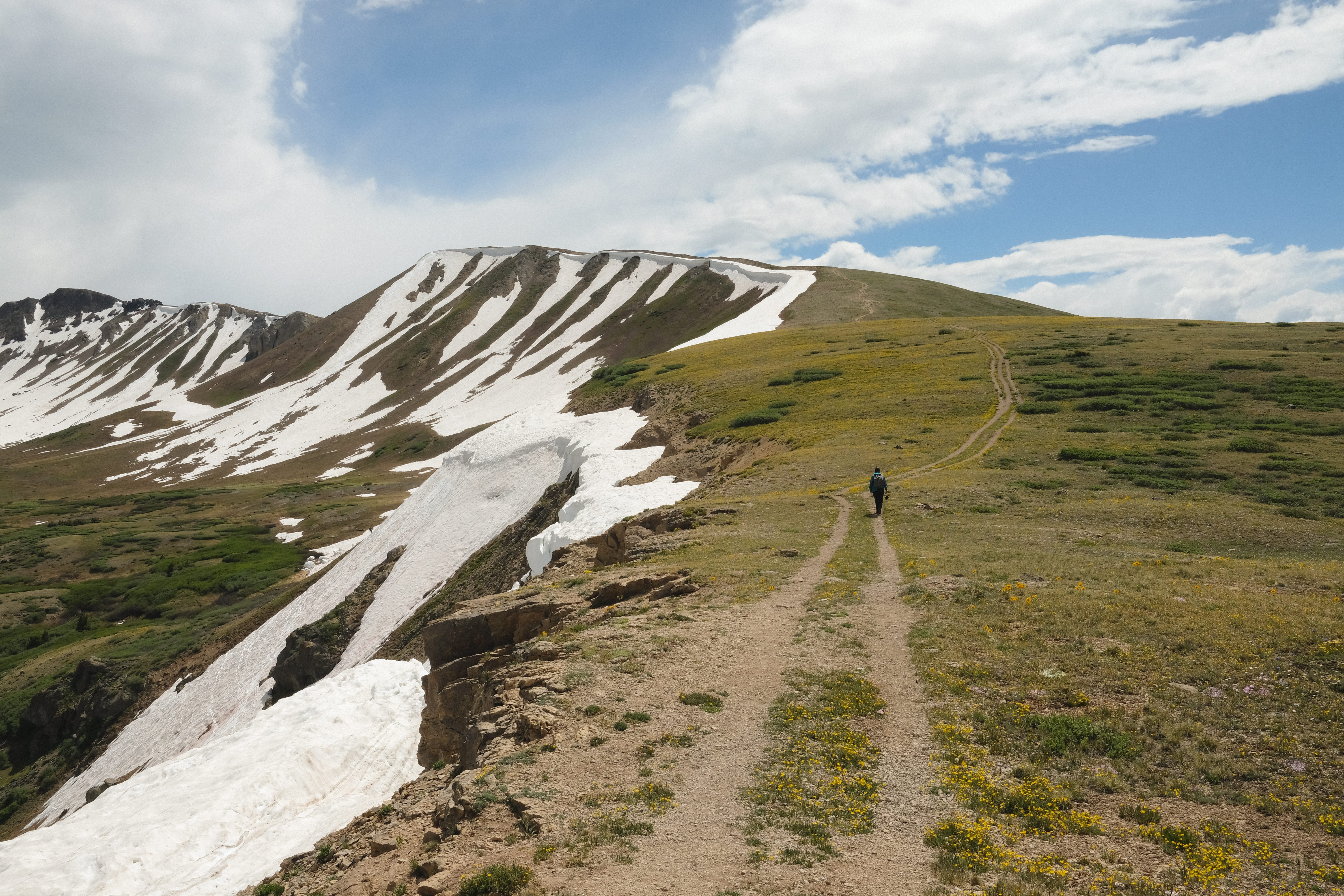
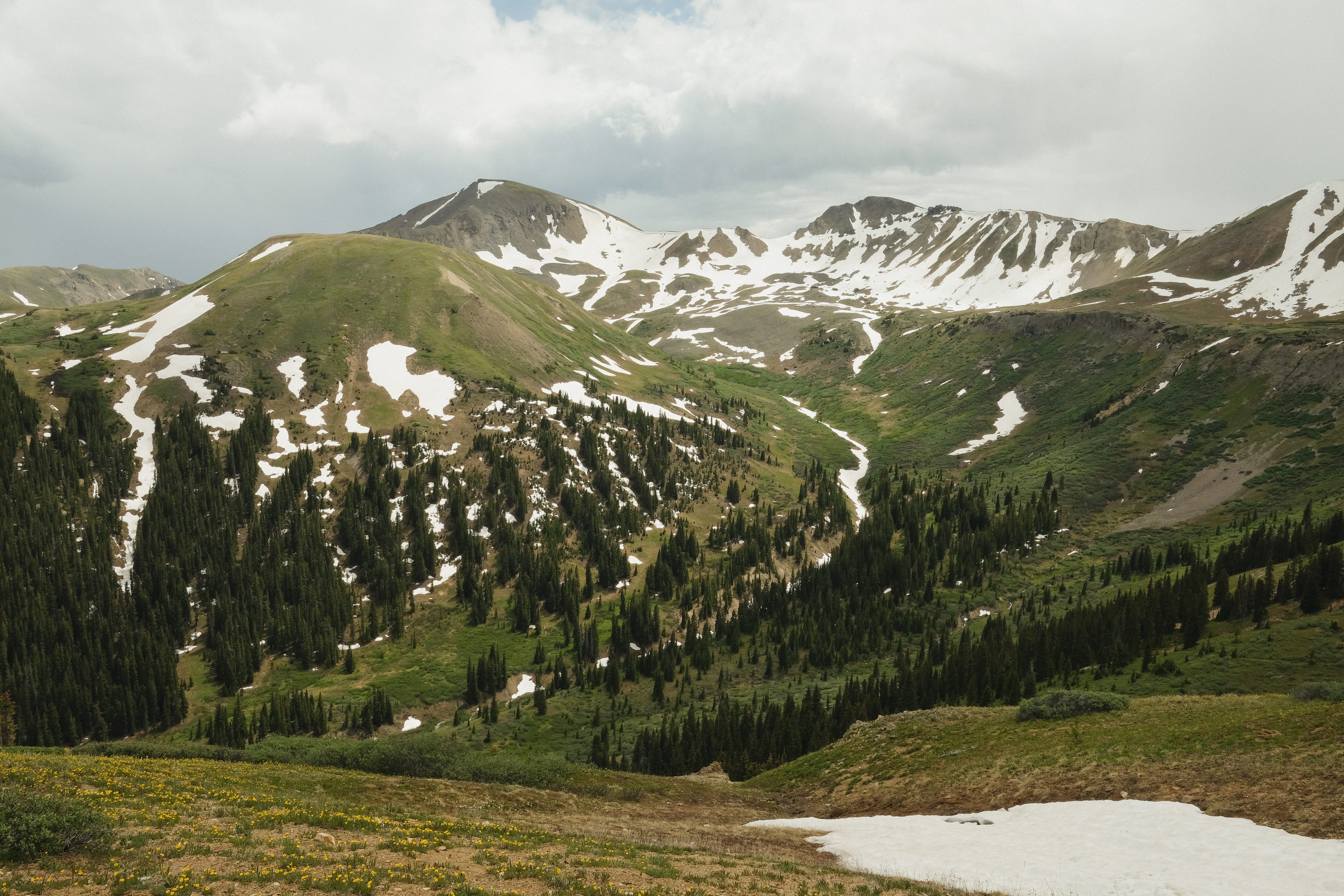
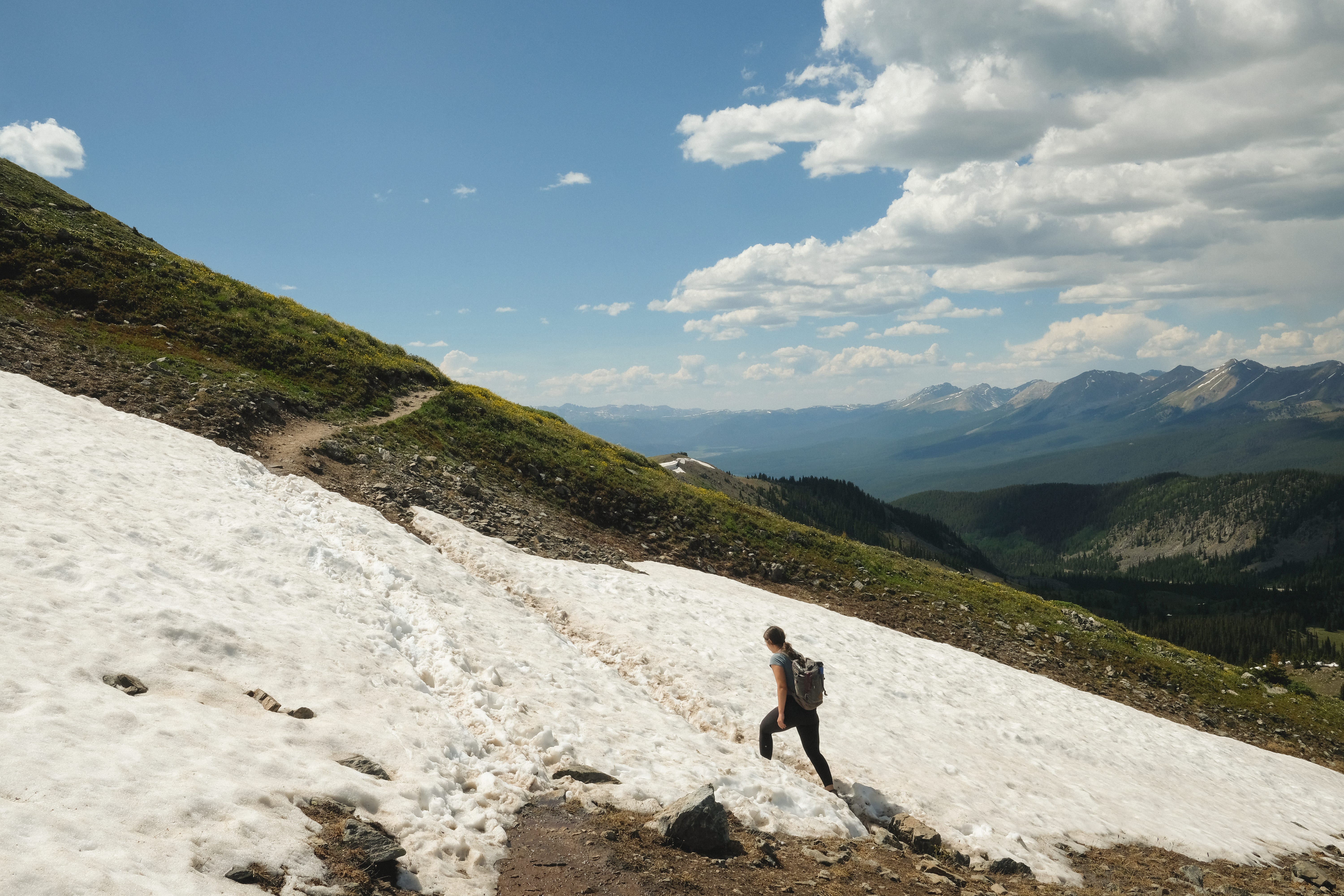
Minutes after we packed up from the car and hit the trail, we found ourselves under falling hail that precipitated out of nowhere. We had bid our time for hours and now things weren’t looking so good. To the South-West, from where the winds were blowing, the Ridge’s peak obscured our view and we could only see the dark clouds that continued in our direction. It was as clear to us as the skies were not that we could either continue away from shelter without knowing if we’d go further into a storm, or could return to the comfort of town, losing out on the trail for the day. Our decision to continue led us up the steep ridge and eventually to clearings of blue sky. Without doubt this could be interpreted as metaphor beyond these specific circumstances.
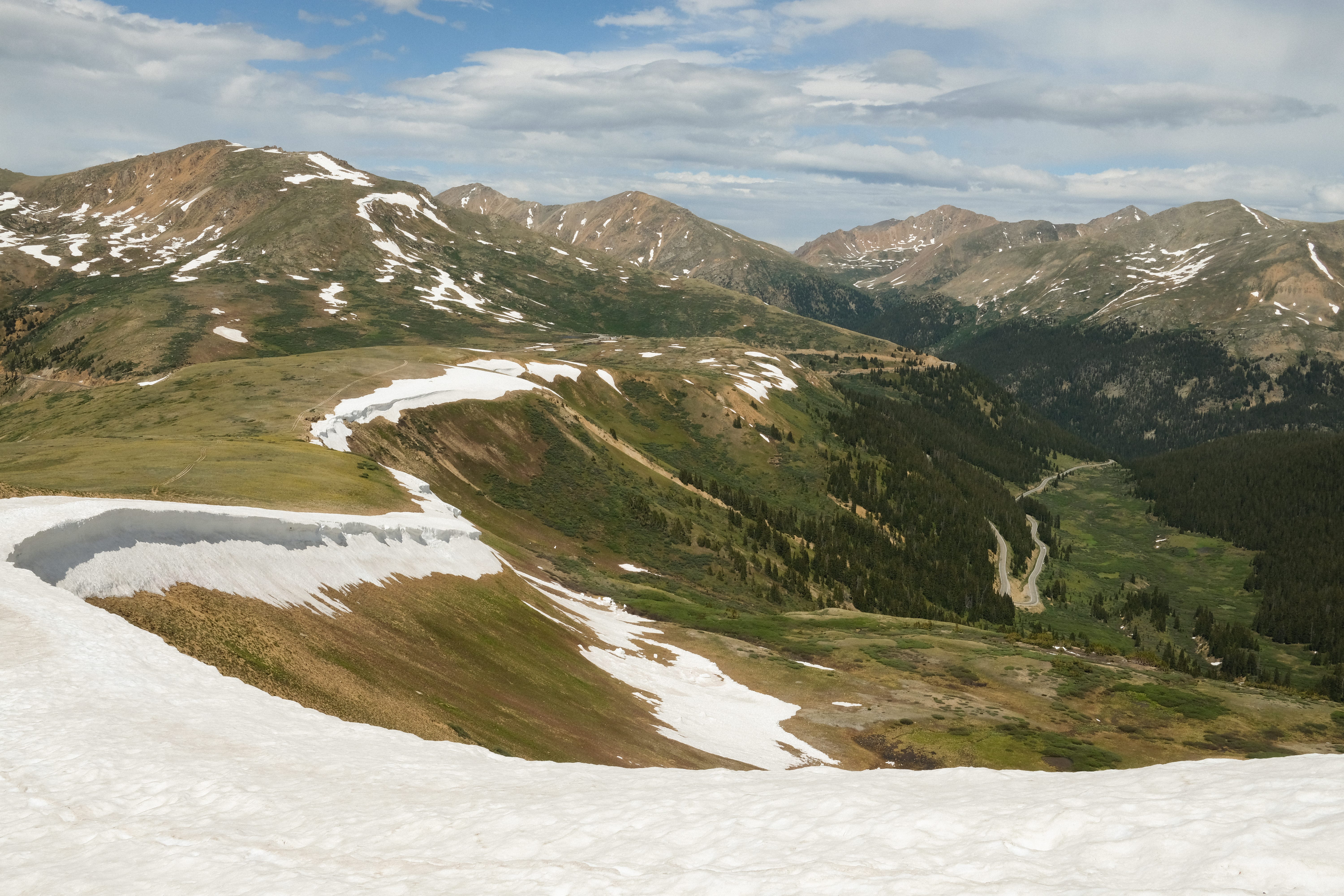
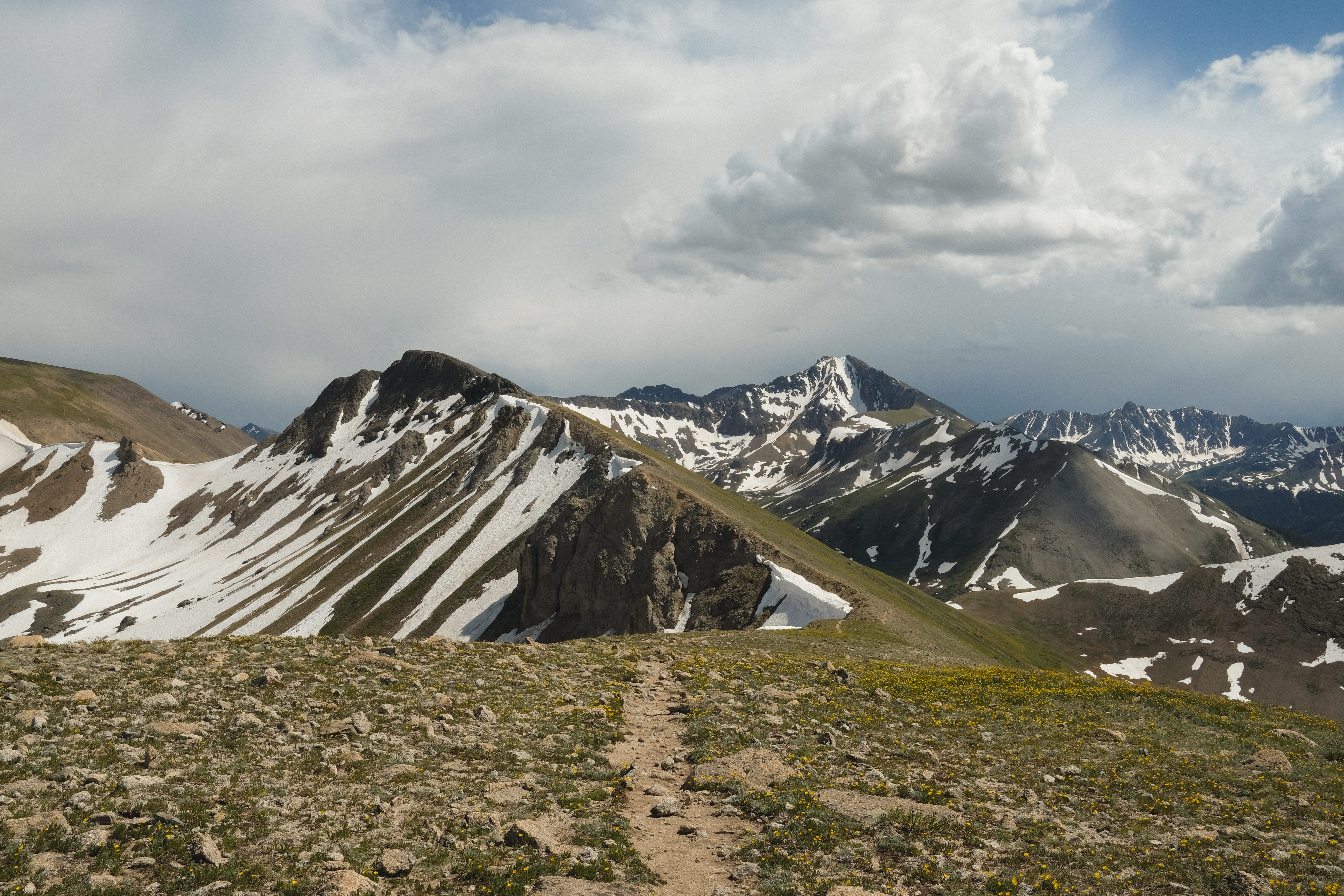
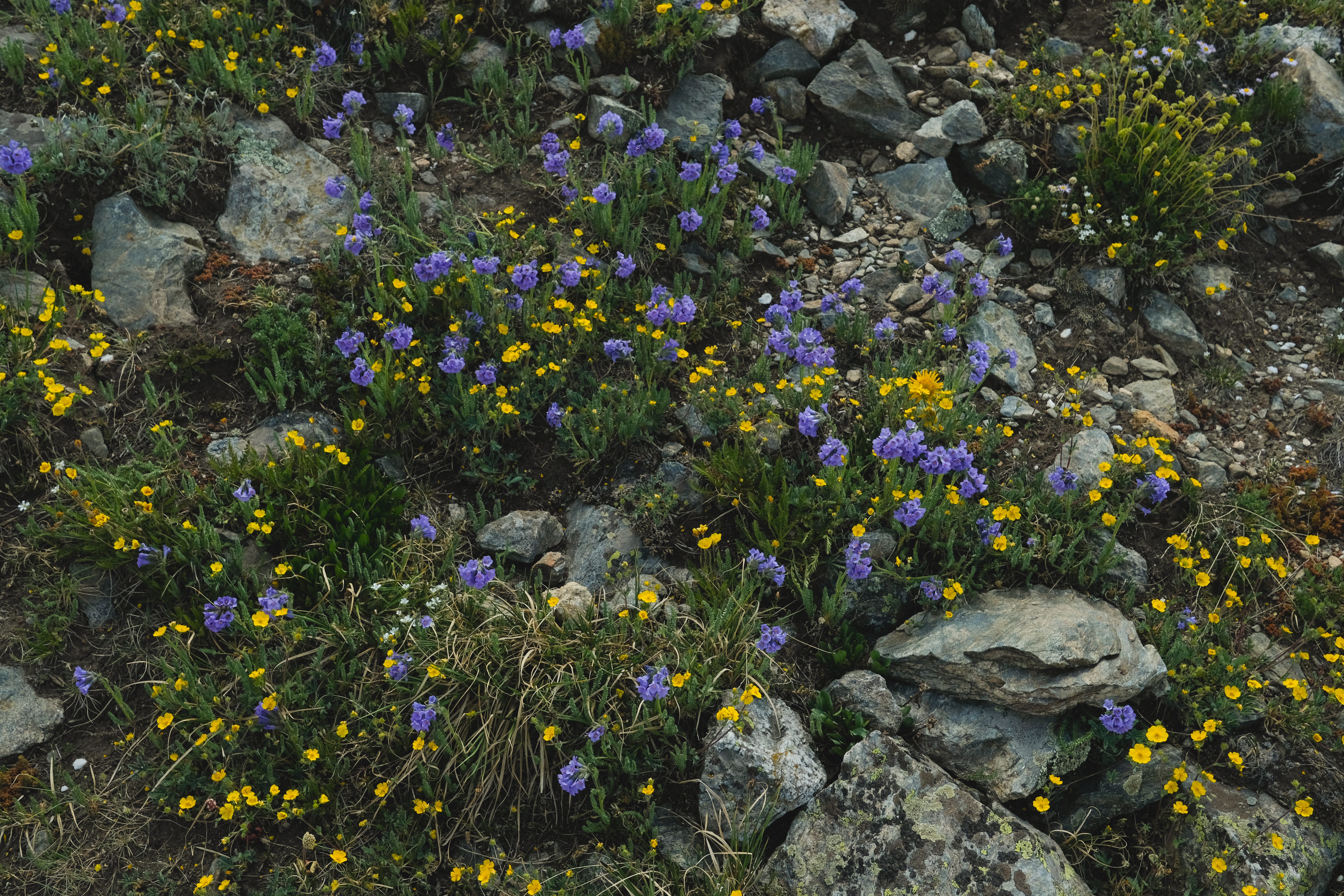
The top of this summit was host to an intense silence. At this altitude, life was scarce and existed only as grasses and wildflowers; everything else was some form of rock or ice. The feeling of this elemental barrenness must be what most of the cosmos is like, if it could be directly perceived by human eyes and ears, and I actually found this to be reassuring. It was a peaceful silence, and the altitude offered such a clear perspective, literally and figuratively, on everything within sight below us. I can understand why many people are drawn to the world of mountains, as grueling and unforgiving as it must be most of the time; in that stretch of the troposphere, all else is artificial. Our daily work, deadlines and responsibilities are mostly manufactured. Certainly they imbue our lives with a sense of meaning - and there are many responsibilities we have towards other people, children and animals that are not manufactured - but the world would continue spinning if we let go of a lot.
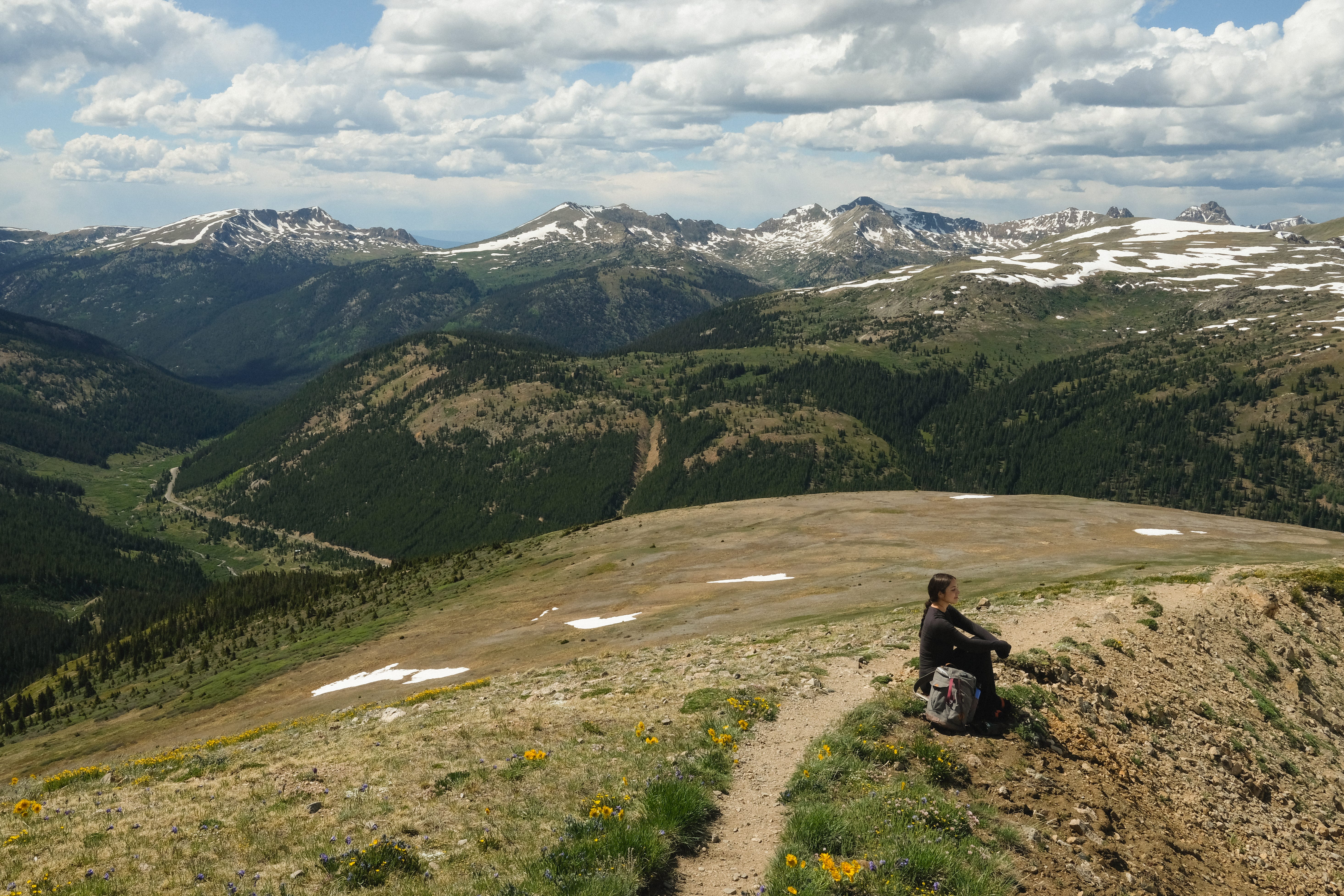
I was supine on this hillside, and could have remained there for much longer, but it was late in the afternoon and time to head back. This was good too, so we could let our afternoon become evening. The silence was eventually filled in with noise, external and internal, and the psychological space that was open for that rare mountaintop clarity was infilled by other things. Still, I know that it’s somewhere to be found, at the summit of that ridge and maybe everywhere else too.
Modafferi, Meghan. 2023. “Continental Divide.” National Geographic Society. Modified October 19, 2023. https://education.nationalgeographic.org/resource/continental-divide/.
"When I asked him what point of the trail he believed to be the most beautiful, he declared it was the point at which we stood." I think you met a Zen master.